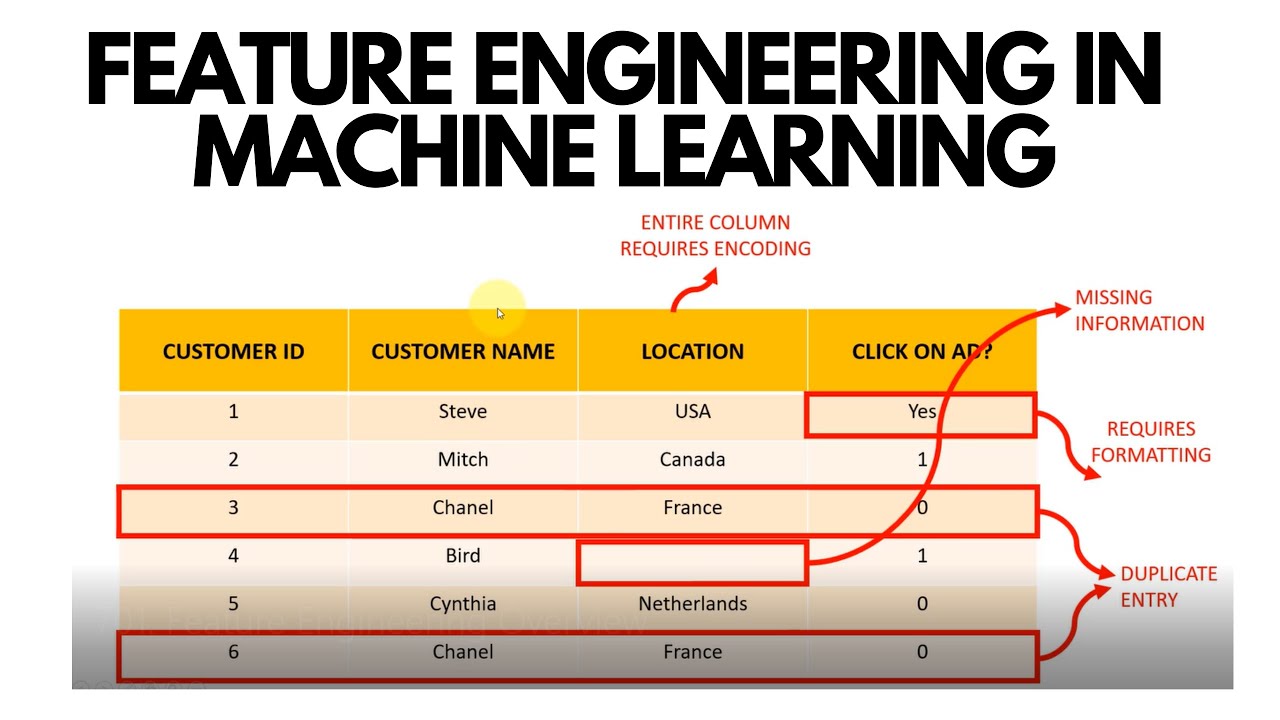
Master Feature Engineering for ML in 5 Steps

Master Feature Engineering for ML in 5 Steps

🧰

Instant Toolkit

2 artifacts

📋
Step-by-Step Guide

1

Understand Feature Engineering Basics

Feature engineering transforms raw data into formats that ML models can use effectively.

Steps:

  1. Read key concepts: Features are predictors; engineering improves model performance by handling data issues.
  2. Install tools:
pip install pandas scikit-learn jupyter feature-engine
  1. Launch Jupyter: jupyter notebook
  2. Load a sample dataset (e.g., Titanic from seaborn):
import seaborn as sns
import pandas as pd
df = sns.load_dataset('titanic')
df.head()

Explore data types, missing values: df.info(), df.isnull().sum()

Why this step matters:
  • -Builds foundation to avoid common data pitfalls
  • -Enables hands-on practice from day one
1-2 hours
Python/Jupyter, Pandas, Seaborn
$0
Definition of Done
  • Explain FE role in ML pipeline
  • Load and inspect a dataset successfully
Common Mistakes to Avoid

Skipping data exploration

Always run df.info() and df.describe()

Installing wrong packages

Use exact pip commands above

2

Following along, or just reading? 👀

Spin up a personalized “learn feature engineering” plan you can save, check off, and return to anytime — unlimited on the free trial.

Start free trial →
3
4
5