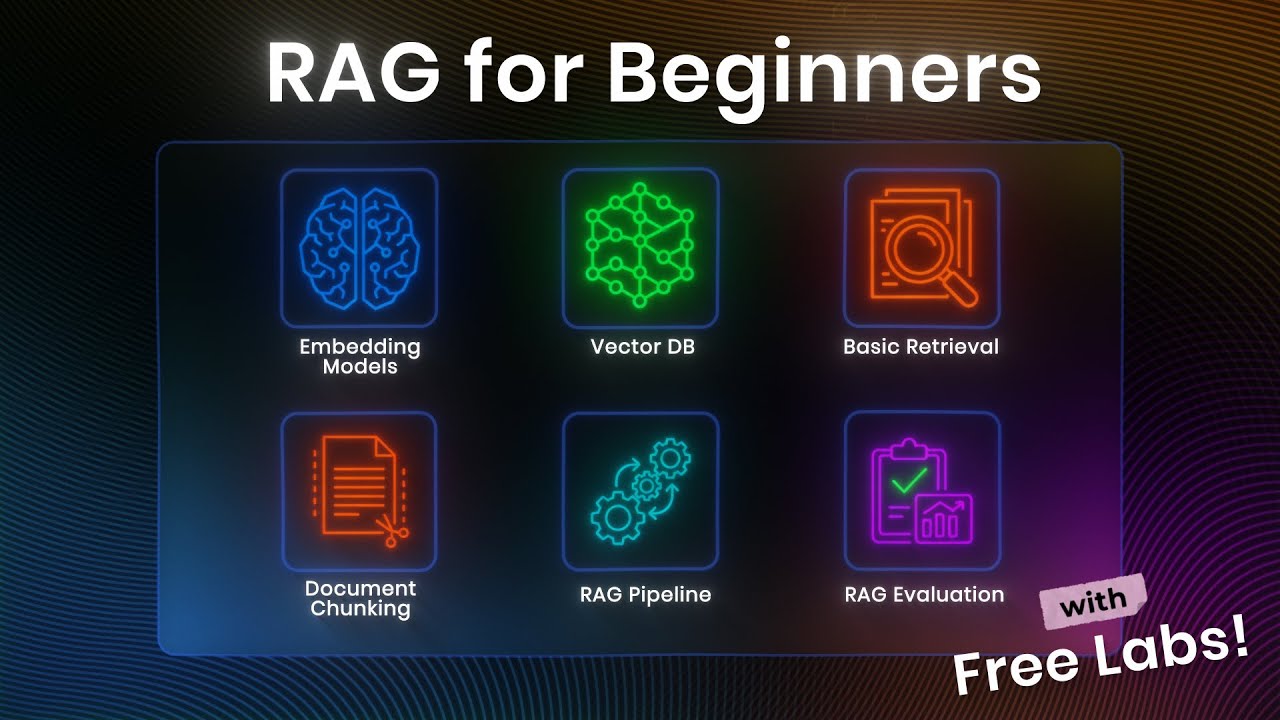
Master RAG Systems in 5 Practical Steps

Master RAG Systems in 5 Practical Steps

🧰

Instant Toolkit

2 artifacts

📋
Step-by-Step Guide

1

Grasp Core Concepts of Retrieval-Augmented Generation

Retrieval-Augmented Generation (RAG) enhances LLMs by retrieving relevant external data before generation, reducing hallucinations and improving accuracy.

Key Components:

  • Retrieval: Fetch relevant docs using embeddings and vector search.
  • Augmentation: Inject retrieved context into LLM prompt.

  • Generation: LLM generates grounded response.

Read the official LangChain overview: LangChain Retrieval Tutorial

Watch intro video for visual explanation.

Why this step matters:
  • -Builds conceptual foundation essential for implementation
  • -Enables designing effective pipelines for real-world data queries
1-2 hours
Web Browser, Note-taking App, LangChain Docs
$0
Definition of Done
  • Explain RAG components in own words
  • Diagram basic RAG flow
Common Mistakes to Avoid

Confusing RAG with fine-tuning

Remember RAG uses external retrieval, no model retraining

Overlooking chunking importance

Study how poor splits degrade retrieval quality

2

Following along, or just reading? 👀

Spin up a personalized “learn RAG systems” plan you can save, check off, and return to anytime — unlimited on the free trial.

Start free trial →
3
4
5